

Are We Leaving Part of the Blue Economy in the Water?
Australia is surrounded by ocean.
We have one of the world's largest marine jurisdictions, an extraordinary diversity of native seaweeds, outstanding marine scientists and enormous coastal and regional communities.
Yet one of the world's fastest-developing forms of aquatic production remains comparatively small here.
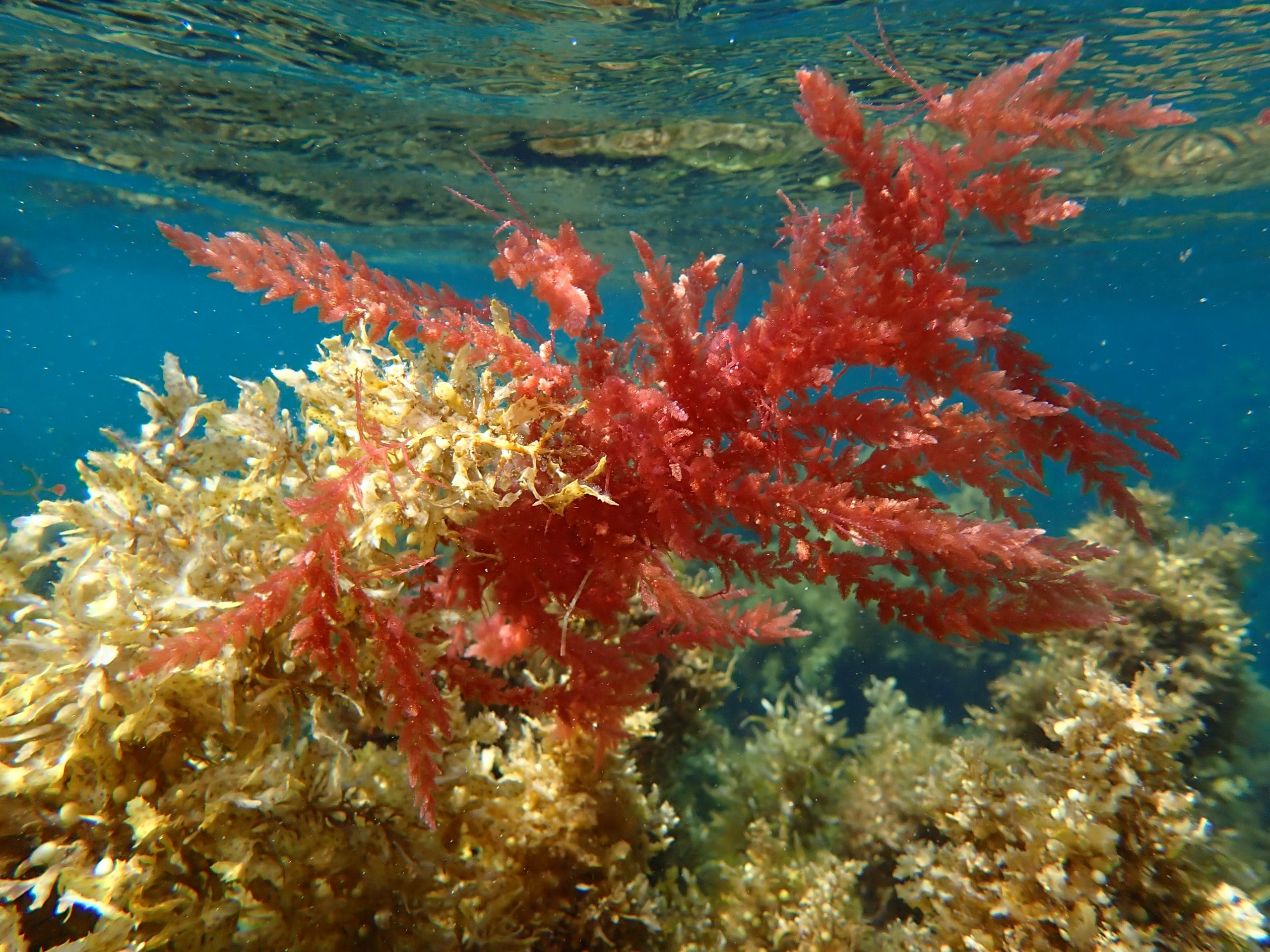
Seaweed.
A recent ABC Landline story from northern Australia provided another glimpse of what Australia could be missing.
Seaweed is already a major global industry. Yet Australia, despite its enormous coastline and marine capability, remains a relatively minor producer.
That should make us ask a simple question:
Are we leaving part of Australia's Blue Economy in the water?
More than something washed up on the beach
For many Australians, seaweed is still something encountered at the beach or wrapped around sushi.
That dramatically understates its potential.
Seaweeds can be used in:
- human food and nutrition;
- animal feeds;
- fertilisers and soil conditioners;
- cosmetics and skincare;
- pharmaceuticals and biomedical products;
- bioplastics and biomaterials;
- environmental remediation; and
- potentially energy and other industrial applications.
Australian researchers and entrepreneurs are already exploring many of these possibilities.
The Australian Seaweed Industry Blueprint previously estimated that the industry could ultimately grow to around $1.5 billion and support thousands of Australian jobs.
That is not insignificant for an island continent looking for new sustainable food industries and regional employment.
Northern Australia — opportunity in plain sight
The Landline story highlighted work underway in northern Australia, including seaweed cultivation and research into its use for soil rehabilitation.
That is particularly interesting because it demonstrates something frequently overlooked when we discuss aquatic foods.
Seaweed does not require agricultural land.
Marine cultivation does not require irrigation with scarce freshwater.
And unlike conventional agriculture, seaweed requires no terrestrial fertiliser to grow in the ocean.
For northern and regional Australia, that potentially opens opportunities extending beyond food production into environmental services, agriculture, aquaculture and regional employment.
It also raises possibilities for Indigenous enterprises and communities with deep connections to sea country.
Australia should be investigating these opportunities carefully rather than assuming tomorrow's marine economy will simply look like today's.
Australia already has businesses showing what is possible
We do not have to travel overseas to see the possibilities.
On the NSW South Coast, marine scientist Dr Pia Winberg established Venus Shell Systems and the consumer brand PhycoHealth.
The business cultivates Australian seaweed and turns it into products spanning food, nutrition, gut health and skincare.
But perhaps the most interesting part of the model is what happens before the seaweed reaches the consumer.
The company describes an industrial ecology system in which carbon dioxide, nitrogen, phosphorus and other nutrients associated with neighbouring food-production activities can become inputs for seaweed cultivation rather than simply becoming waste.
In other words:
Waste nutrients → seaweed → food and high-value products.
That is the circular economy translated into aquatic food production.
In 2026, the NSW Government approved $2 million towards expansion of Venus Shell Systems' marine biorefinery at Huskisson, aimed at increasing production of high-value seaweed ingredients for nutrition, skincare and medical applications.
This is no longer simply an interesting experiment.
It is an emerging Australian industry.
From seafood to aquatic food
There is another reason the Seafood Consumers Association is interested.
We frequently use the word seafood as though it means fish, crustaceans and molluscs.
The future may require us to think more broadly about aquatic foods.
Seaweeds are part of that conversation.
Producing more nutritious food for a growing population does not necessarily mean producing more cattle, more grain or even more fish.
Some of it may come from organisms much lower in the aquatic food system.
That matters because low-trophic production can potentially complement conventional fisheries and aquaculture rather than compete directly with them.
Seaweed and conventional aquaculture can work together
Seaweed also creates intriguing opportunities alongside existing aquaculture.
Fish and other fed aquaculture species release nutrients into surrounding water.
Seaweeds need nutrients.
Properly designed integrated systems can therefore potentially use one production stream to support another.
This concept — often described as integrated multi-trophic aquaculture — deserves considerably greater attention as Australia considers how its aquaculture sector should develop.
Instead of thinking about a marine farm as producing one species, we can begin asking whether different forms of aquatic production can complement one another.
Fish.
Shellfish.
Seaweed.
Nutrients that might otherwise represent a waste stream can potentially become biological inputs.
That is a very different way of thinking about food production.
The environmental opportunity needs careful language
Seaweed is sometimes promoted as though it will single-handedly solve climate change, clean our oceans and feed the planet.
SCA would caution against that sort of enthusiasm.
Environmental benefits depend upon the species, location, farming method, scale, processing, transport and what ultimately happens to the harvested biomass.
Large-scale marine cultivation also needs appropriate biosecurity, environmental assessment and monitoring.
But avoiding exaggerated claims does not diminish the opportunity.
It strengthens the case for properly designed Australian research, regulation and investment.
Australia should build a seaweed industry on evidence, not hype.
Which brings us to marine protected areas
There is another dimension to this story that deserves attention.
Australia is currently making decisions about the future management of enormous areas of marine space.
SCA recently made a submission concerning Australian Marine Parks and argued that marine planning needs to consider food production, economic activity, regional communities and future opportunities alongside conservation objectives.
Seaweed provides a perfect example of why.
When governments allocate marine space today, how well do they account for industries that may become important tomorrow?
A location that currently appears to have little economic activity might potentially be suitable in future for:
- seaweed aquaculture;
- shellfish production;
- integrated multi-trophic aquaculture;
- research;
- restoration;
- renewable energy integrated with aquaculture; or
- other Blue Economy activities not yet commercially mature.
Once marine space becomes unavailable for particular activities, future options may also disappear.
That does not mean seaweed farms—or any other commercial activity—should automatically be permitted inside protected areas.
It means something more fundamental:
Marine spatial planning should recognise future sustainable uses as well as existing ones.
Good conservation and good food production do not always have to occupy opposing sides of a line on a map.
Protecting nature by using nature?
There is an interesting philosophical point here.
Traditional food production frequently involves changing the environment to suit the crop.
Clear land.
Irrigate it.
Fertilise it.
Control weeds and pests.
Seaweed cultivation reverses some of that thinking.
The crop already belongs in the aquatic environment.
The challenge becomes identifying suitable native species, developing reliable seedstock, understanding ecological carrying capacity and creating production systems that work with the marine environment.
Australia has considerable scientific capability to do this.
What it needs is the ambition and regulatory framework to allow responsible businesses to scale.
The regulatory challenge
This may prove one of the largest barriers.
Australian seaweed aquaculture crosses fisheries, aquaculture, environmental, biosecurity and marine-planning systems, with requirements varying between jurisdictions.
Research commissioned through Agri Futures has already identified the need for improved national coordination and a science-based, adaptive approach to seaweed aquaculture regulation.
That should receive attention.
Emerging industries can easily become trapped in regulatory systems originally designed for completely different activities.
Australia needs safeguards.
But it also needs pathways.
Good regulation should protect the environment while allowing environmentally responsible industries to develop.
A Blue Economy should produce something
SCA has argued previously that Australia needs to think more seriously about its Blue Economy.
Seaweed illustrates why.
A Blue Economy cannot simply be a new expression for marine conservation.
Nor should it mean exploiting every available part of the ocean.
A genuine Blue Economy must find the balance between protection, sustainable production, innovation, food security, regional employment and environmental improvement.
Seaweed potentially touches every one of those objectives.
It can be food.
It can be an ingredient.
It can become animal feed.
It can support agriculture.
It can potentially capture nutrients.
It can create regional jobs.
And Australian researchers are finding increasingly sophisticated uses for compounds derived from it.
Don't leave the opportunity in the water
Australia has spent decades discussing how we can produce more food with fewer environmental impacts.
Part of the answer may have been growing along our coastline all along.
The question now is whether we have the research, investment, marine planning and regulatory imagination to turn that natural advantage into a responsible Australian industry.
We should protect our oceans.
We should manage fisheries sustainably.
We should restore degraded marine ecosystems.
But we should also recognise that the ocean can contribute to Australia's future food security and prosperity.
Those objectives need not be mutually exclusive.
The Blue Economy should be both blue and an economy.
And Australia's emerging seaweed industry deserves a place in it.
Comments
No comments yet.