Sustainability certification is useful — but consumers deserve to understand exactly what it tells them, and what it does not.
Australian consumers could be forgiven for thinking something remarkable has just happened in the canned tuna aisle.
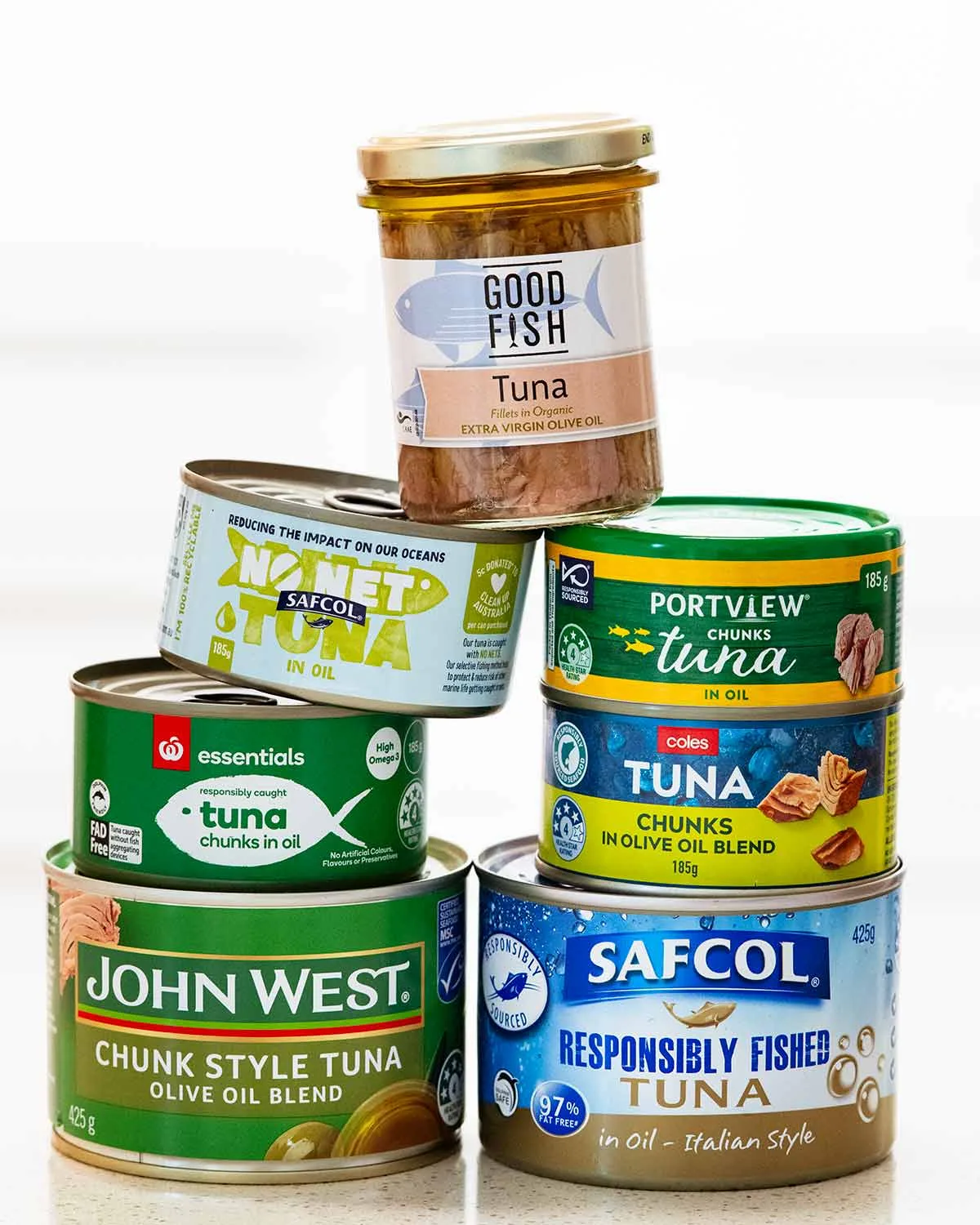
The Marine Stewardship Council (MSC) announced in April that close to 70 per cent of canned tuna sold in Australia is now sourced and labelled from MSC-certified fisheries. Coles, Woolworths and ALDI have moved their home-brand tuna ranges to MSC-certified sources, while the number of MSC-labelled tuna products reportedly increased from 128 in 2025 to more than 220 in 2026.
That is significant.
But the Seafood Consumers Association believes it also provides a good opportunity to ask a simple consumer question:
What does the blue MSC fish tick on a can of tuna actually tell us?
And equally importantly:
What doesn't it tell us?
First, give credit where it is due
MSC certification is designed principally to address the environmental sustainability of wild-capture fisheries.
Its Fisheries Standard is built around three core principles: maintaining sustainable fish stocks, minimising environmental impacts from fishing, and ensuring effective fisheries management.
These are important issues.
MSC certification also involves independent conformity assessment, while Chain of Custody certification is intended to maintain traceability of certified seafood through the supply chain.
Consumers who want to support better-managed wild-capture fisheries therefore have a legitimate reason to value this information.
But that is not the end of the consumer's seafood story.
A sustainability label is not a complete seafood assurance label
The MSC itself makes an important distinction which deserves much wider consumer understanding.
It says its blue fish tick focuses on the environmental impacts of fishing. MSC explicitly acknowledges that the label does not certify social or economic conditions and does not cover matters such as the packaging or carbon footprint of the final product.
That distinction matters.
When consumers see a prominent certification mark on a food product, there is a risk that the positive message associated with the mark extends in their minds well beyond what has actually been certified.
A consumer may reasonably have many other questions about a can of tuna.
What species am I eating?
Where was it caught?
Where was it processed and canned?
How much of the contents is actually tuna?
What else has been added?
What do the oils, brines, sauces and other ingredients contribute?
What food-safety controls apply?
What about labour conditions?
And what exactly does “sustainable” mean in this particular fishery?
The blue tick should be understood for what it is: information about an important part of the story, not necessarily the whole story.
How much tuna is actually in your can?
This is where consumers should turn the can around.
Australian food-labelling rules require ingredients to be listed in descending order by ingoing weight. Added water generally also has to be declared, subject to specified exceptions.
Most packaged foods must additionally identify the percentage of key or characterising ingredients.
That means consumers can learn considerably more from the back of a can than they might realise.
Two cans sitting beside each other may both carry sustainability claims while having different proportions of tuna and different combinations of water, brine, oils, salt, flavourings, thickeners or other ingredients.
None of those additions is inherently evidence of wrongdoing. Many are perfectly legitimate components of different canned-tuna products.
The issue is transparency.
Consumers should know what proportion of the product they are buying is actually fish and what makes up the remainder.
Sustainability certification does not replace that information.
Where did the tuna come from?
Country of origin introduces another layer.
Seafood is a priority food under Australia's Country of Origin Food Labelling Information Standard (CoOL). Imported priority foods must carry country-of-origin information.
But consumers interested in seafood provenance often want more than the legally required statement.
A tuna can may involve several geographical steps: the waters in which the fish was caught, the flag or nationality of the fishing operation, the country in which the tuna was processed and canned, and finally the country in which it is sold.
MSC itself notes that most canned tuna sold in Australia is imported, much of it associated with the Western and Central Pacific Ocean.
There is therefore an interesting consumer question:
How easily can an ordinary shopper reconstruct the journey of the tuna from the information on the can?
Is 70 per cent really a new revolution?
This deserves closer examination.
The recent publicity describes approximately 70 per cent MSC certification as a major transformation of the Australian canned-tuna market, with the latest supermarket home-brand commitments playing an important role.
They certainly matter.
But Australia did not start from zero.
In February 2016, the MSC itself announced that John West Australia's transition would put the MSC label on more than 100 million cans and meant that 43 per cent of Australia's canned tuna was already MSC-certified sustainable.
WWF-Australia similarly records that its partnership with John West began in 2012 and culminated in the major MSC-certified skipjack transition in February 2016.
That history is important context when assessing today's headline figure of close to 70 per cent.
There is another question worth answering.
Does “70 per cent of canned tuna sold in Australia” mean 70 per cent by volume, units, sales value or some other measure?
Consumers — and journalists — should be told the denominator behind prominent market statistics.
Sustainability and food safety are different questions
A particularly important distinction is between sustainable fishing and safe food.
The MSC Fisheries Standard assesses fisheries against its environmental and management principles.
Australia's food regulatory system deals separately with such matters as ingredients, additives, contaminants, allergens and food safety.
That distinction should not diminish MSC certification. It simply means that different systems answer different questions.
A fish can come from a sustainably managed fishery and still require all the normal food-safety, processing, labelling and consumer-protection controls that apply to food.
Consumers should not have to understand the architecture of international certification systems to appreciate that difference.
Clear communication should do that for them.
But what about quality and taste?
There is another question that sustainability certification does not answer — and it may be one of the most basic questions consumers ask when buying food:
Is it good to eat?
And, just as importantly:
If I enjoy this can of tuna today, can I reasonably expect the same quality and eating experience when I buy it again?
Taste, texture, appearance, aroma and consistency matter. Seafood is food, after all. Sustainability is critically important, but consumers do not purchase canned tuna simply to support a fishery management system. They purchase it to eat.
The MSC blue tick was not designed as a certification of superior taste or eating quality. It therefore does not tell a consumer that one certified can of tuna will taste better than another, have a better texture, contain a higher proportion of fish, or provide a more consistent eating experience.
There are certification systems elsewhere that demonstrate a very different approach.
France's Label Rouge, for example, is an official national quality designation. Products must demonstrate a superior level of quality compared with similar products normally marketed. Importantly, maintaining superior taste quality involves regular sensory analyses and organoleptic testing against comparable products.
Label Rouge is used for seafood products as well as other foods.
That provides an interesting contrast.
One certification may essentially ask:
“Does this seafood come from a fishery meeting defined sustainability requirements?”
A quality-focused system can additionally ask:
“Is this a demonstrably superior product to eat, and does it continue to meet that standard?”
Neither question makes the other irrelevant.
But consumers deserve to understand which question the logo on the package is actually answering.
Perhaps the bigger lesson for seafood certification is that sustainability, safety, authenticity, quality and eating satisfaction are different dimensions of consumer trust.
No single logo should automatically be assumed to guarantee them all.
What about people?
This area also requires careful language.
MSC says its ecolabel does not certify social or economic conditions. However, its certification program now also contains separate forced and child labour eligibility requirements for fisheries and Chain of Custody certificate holders.
That is an important distinction.
It would therefore be wrong simply to say that labour is completely ignored. But it would equally be wrong for consumers to interpret the blue fish tick as a comprehensive certification of working conditions throughout every part of the seafood supply chain.
Environmental sustainability and social responsibility overlap, but they are not the same thing.
And what about Australian tuna?
Australia also has smaller businesses supplying domestically caught tuna.
This raises another question worthy of investigation rather than assumption.
How accessible are private certification schemes to small Australian fishing businesses compared with large international fisheries and supply chains?
Certification, auditing and use of an ecolabel involve costs. MSC's own ecolabel licensing arrangements include annual fees and royalties for businesses using the label on consumer-facing products.
That does not establish that certification is uneconomic for Australian operators, nor does it prove those costs are passed directly to consumers.
But it does justify asking whether scale influences access to certification and supermarket procurement programs.
SCA believes this deserves proper examination.
The media has responsibilities too
This story also demonstrates why independent food and seafood journalism matters.
The MSC issued a media release on 30 April announcing that sustainable tuna now “dominates” Australian supermarkets.
Six days later, an Australian food-industry publication carried an article following substantially the same narrative: approximately 70 per cent certification; Coles, Woolworths and ALDI; growth from 128 to more than 220 products; Australia's global ranking; 336 million servings; and quotations from MSC, Woolworths and Simplot.
There is nothing wrong with reporting an organisation's announcement.
But media releases are starting points for journalism, not necessarily the finished product.
Where was the independent consumer voice?
Where was the explanation of what the certification does and does not cover?
Where was the historical context that John West's transition had already taken MSC-certified tuna to approximately 43 per cent of the Australian category a decade earlier?
And what precisely sits behind the new 70 per cent statistic?
These are not anti-MSC questions.
They are pro-transparency questions.
Turn the can around
The Seafood Consumers Association encourages consumers to look beyond any single logo when purchasing seafood.
Look for the species.
Look at country of origin.
Look at the percentage of fish.
Read the ingredients.
Consider where it was processed.
Look at sustainability information and understand what the certification actually covers. Then remember the simplest test of all: did you enjoy eating it, and was the quality what you expected for the price you paid?
And ask questions when information is unclear.
The MSC blue tick can tell consumers something useful and important about the environmental credentials of the fishery from which certified seafood originated.
But one blue tick cannot tell the entire story of a can of tuna.
Australian consumers deserve the whole story.
Because good seafood choices should be based not on one logo or one marketing claim, but on clear, accurate and accessible information about the seafood we are actually buying and eating.
Seafood Consumers Association Ltd is an independent consumer-focused charity advocating for transparent, safe, sustainable, affordable and trustworthy seafood.
Comments
No comments yet.