
What Phillip Island’s Floating Wetlands Mean for Australia’s Seafood Consumers
When most Australians read about wastewater treatment and agricultural run-off, they think of municipal utility bills or environmental compliance. Rarely do they connect what happens in an inland holding pond or farm dam to the quality, safety, and price of the Flathead, Oysters, or farmed fish on their dinner plate.
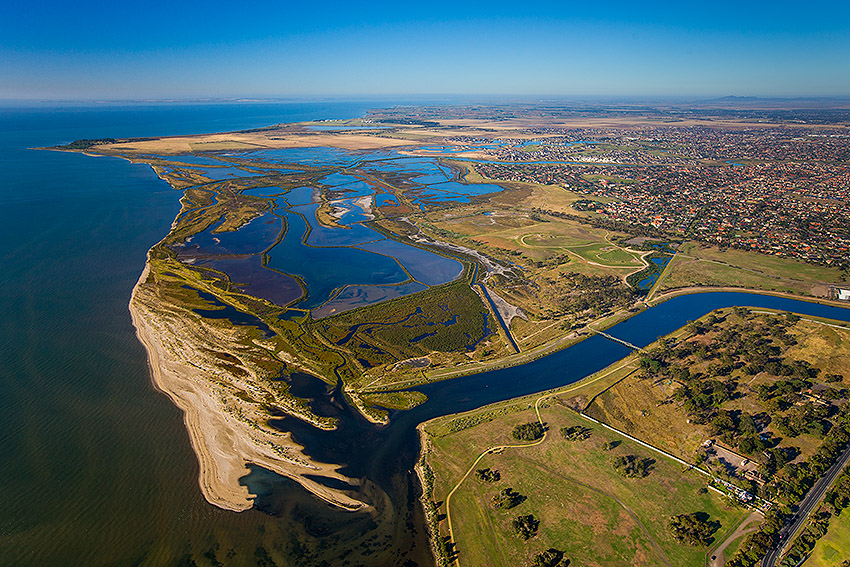
A world-first, two-year field trial conducted on Phillip Island, Victoria, published in the Journal of Environmental Management, has demonstrated that nature-based constructed floating wetlands (CFWs) slash potent greenhouse gas emissions while cleaning up wastewater.
Led by researchers from RMIT University, Westernport Water, and CSIRO—with sensor technology developed with Deakin University—a 330-square-metre floating pontoon planted with native Australian reeds and sedges cut methane emissions by up to 66%, carbon dioxide by up to 36%, and nitrous oxide by 18%.
For the Seafood Consumers Association (SCA), this breakthrough is not merely a win for water utilities—it is a vital proof-of-concept for the future of Australia’s Blue Economy, aquaculture biosecurity, and long-term seafood food security.
How the Science Works: Nature’s Biological Filter
Wastewater lagoons, aquaculture discharge ponds, and farm catchments typically suffer from high nutrient loads. When stagnant, these water bodies turn into anaerobic breeding grounds for gas-producing microbes, releasing significant volumes of methane (a gas with more than 28 times the short-term warming potential of  ).
).
By installing floating rafts planted with native species like common reed (Phragmites australis) and sedges (Baumea articulata), the root systems hang directly into the water column. Rather than relying on power-intensive industrial aeration or chemical dosing:
- Microbial Biofilms: The submerged root zones create a vast surface area for beneficial bacteria that naturally oxidize and consume methane and nitrogen compounds before they escape into the atmosphere.
- Active Pollutant Trapping: As lead researchers noted, the dense root matrices act as biological filters, absorbing excess nutrients, trapping suspended solids, and binding heavy metals.
Why Seafood Consumers Should Care: The Long-Term Dividends
What enters our catchments inevitably flows into our coastal estuaries, bays, and aquaculture zones. Downstream water quality directly impacts the viability of the seafood industry and the safety of the food supply:
1. Safeguarding Coastal Estuaries & Shellfish Harvesting:
Shellfish like oysters and mussels are natural filter feeders. When agricultural dams and municipal wastewater lagoons overflow or discharge into coastal environments (such as Western Port or Port Phillip Bay), nutrient overloads trigger toxic algal blooms, bacterial contamination, and forced harvest closures. Deploying low-cost floating wetlands upstream intercepts contaminants at the source, keeping estuarine waters clean and keeping shellfish beds open and productive.
2. Decarbonizing Inland & Recirculating Aquaculture:
Over 60% of seafood consumed in Australia now originates from aquaculture. As domestic commercial fishers face sweeping marine closures, inland and coastal finfish farming (Barramundi, Trout, Murray Cod) must expand. Retrofitting floating wetland pods into aquaculture settlement ponds and effluent canals offers an affordable, low-energy method to clean recycled water, reduce biological oxygen demand, and lower the carbon footprint of domestic fish farming.
3. Biosecurity and Toxic Contaminant Buffers:
The trial researchers highlighted that root systems also bind heavy metals and persistent chemicals (including emerging pollutants like PFAS). Preventing these contaminants from entering broader aquatic food chains ensures that Australian wild and farmed finfish remain clean, pure, and rich in beneficial nutrients without contaminant bioaccumulation.
4. Aligning Government Science with Consumer Affordability:
Australia cannot afford more fragmented policy silos. We cannot spend hundreds of millions in public funds on marine spatial closures that choke wild harvest, while neglecting cost-effective nature-based engineering that protects water catchments. When water utilities and farms clean water naturally and cheaply, operational overheads fall, mitigating the input costs that drive up retail seafood prices.
Connecting the Dots: A Unified Blue Economy
Phillip Island’s floating wetland trial proves that environmental restoration and food production do not have to be in conflict. When we support natural ecological functions—whether floating reeds in a Victorian lagoon or sustainable, low-trophic finfish farming—we protect public health, lower national emissions, and safeguard the food supply.
For Australia’s 26 million seafood consumers, cleaner water at the source means safer, more abundant, and more affordable whole seafood on the table. It is time Canberra connected inland water management, aquaculture innovation, and preventive health into one cohesive national strategy.
Comments
No comments yet.