
How Aquna Murray Cod Could Help Griffith Reel in a Freshwater Aquatic Food Centre of Excellence
Regional Australia is no stranger to producing world-class agricultural products, but it is not every day that a local fish farm catches the attention of British royalty.
Aquna Sustainable Murray Cod, operating out of Griffith in the Riverina region of New South Wales, recently did just that.
During their 2024 tour of Australia, King Charles III and Queen Camilla sampled Aquna's hot-smoked Murray cod and Aquna Gold caviar at a community barbecue in Sydney.
The King was reportedly so impressed by the producer's sustainable farming practices and the unique taste of the native fish that he requested a shipment be sent straight to Buckingham Palace.
It’s an incredible milestone—not just for Aquna, but for the entire regional community that supports it.
Putting Griffith on the Global Map
This royal endorsement coincides with Griffith taking the #63 spot in a recent feature celebrating the Top 100 Best Aussie Towns. Known traditionally for its citrus, wine, and broadacre crops, Griffith is rapidly evolving into a hub for cutting-edge, high-value agricultural innovation.
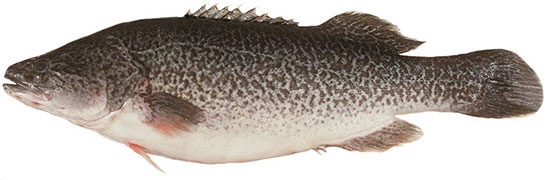
Commercial fishing of wild Murray cod has been banned for decades to protect the species from overfishing. Aquna was one of the companies that sidestepped this challenge by developing innovative, land-based open ponds that mirror the fish’s native floodplain environment. Through careful water management, a balanced ecosystem of specific algae, and a zero-waste approach where nutrient-dense water is recycled to irrigate surrounding crops, the company has managed to turn an endangered species into a sustainable, globally recognised luxury export.
Paving the Way for a FAFCoE
The Aquna Sustainable Murray Cod is more than just a great PR story; it represents a powerful catalyst for establishing a Freshwater Aquatic Food Centre of Excellence (FAFCoE) in the Griffith region. Aquna may be the largest fish farm, but they are certainly not the only fish farm in central Australia so a FAFCoE, a state-of-the-art educational and research facility designed to bridge the gap between academia, vocational training (like TAFE), and local agricultural industries would be a very powerful introduction.
Here is how Aquna’s international prestige can help turn a Griffith FAFCoE from a concept into a reality:
Showcasing Proven Innovation: To secure government funding and industry partnerships for a FAFCoE, regions must prove they are at the forefront of agricultural evolution. Aquna’s collaboration with the CSIRO on advanced breeding programs and their integration into high-end global supply chains proves that Griffith is already leading the way in sustainable food systems.
Driving the Skills Agenda: As local aquaculture and agriculture businesses scale up to meet global demand, the need for a highly skilled workforce skyrocket. A FAFCoE would provide the essential training grounds for the next generation of farmers, aquatic veterinarians, water resource managers, and food technologists directly within the Riverina, keeping talent in the region.
Fostering Sustainable Practices: King Charles III’s interest was explicitly drawn to Aquna’s sustainability measures. A FAFCoE dedicated to sustainable land and water stewardship would build on this momentum, focusing on modernising the region's food and fibre sector to ensure long-term viability in the Murray-Darling Basin. Aquna’s journey from a single pond to the dining tables of Buckingham Palace is a testament to the potential of regional Australia. By leveraging this spotlight, Griffith has a golden opportunity to champion the creation of a Freshwater Aquatic Food Centre of Excellence, ensuring that the region remains the beating heart of Australia's agricultural innovation for decades to come.
Reeling in Growth: Additionally, this FAFCoE could concentrate on the important European Carp problem by focusing on elimination by functional and relevant commercial ways – creating products and exports as well as increasing our national food security. When you consider that over $15 million has been spent so far on the ‘virus’ concept and still no end is in sight then surely you must wonder why those in control are not considering such ideas as this.
The Asia Pacific region is home to 60 percent of the world's population, scattered over a vast area. The region conducts 42 percent of the world's trade, and it is the world's largest trading bloc. Australia has a major deficit when it comes to fish/seafood as we are reliant on over 70% of imports to meet our current needs. There is no plan, no vision and yet here we have such a wonderful opportunity to change our status quo and get firmly on the front foot!
https://aquna.com/wp-content/uploads/2026/05/Aus-Traveller_11-May_2026.pdf
Comments
No comments yet.