
Plastic in the ocean is one of the most widely discussed environmental issues of our time — and for good reason. A new comprehensive scientific reference, Plastics in the Sea: Occurrence and Impacts by Sandra Shumway and J. Evan Ward, brings together decades of research on how plastics of all sizes interact with marine environments and marine life.
For seafood consumers, the key question is simple:
Does this affect the seafood I eat, and what should I be aware of?
The good news is that the science gives us a clearer picture — and it’s not about fear, but informed awareness.
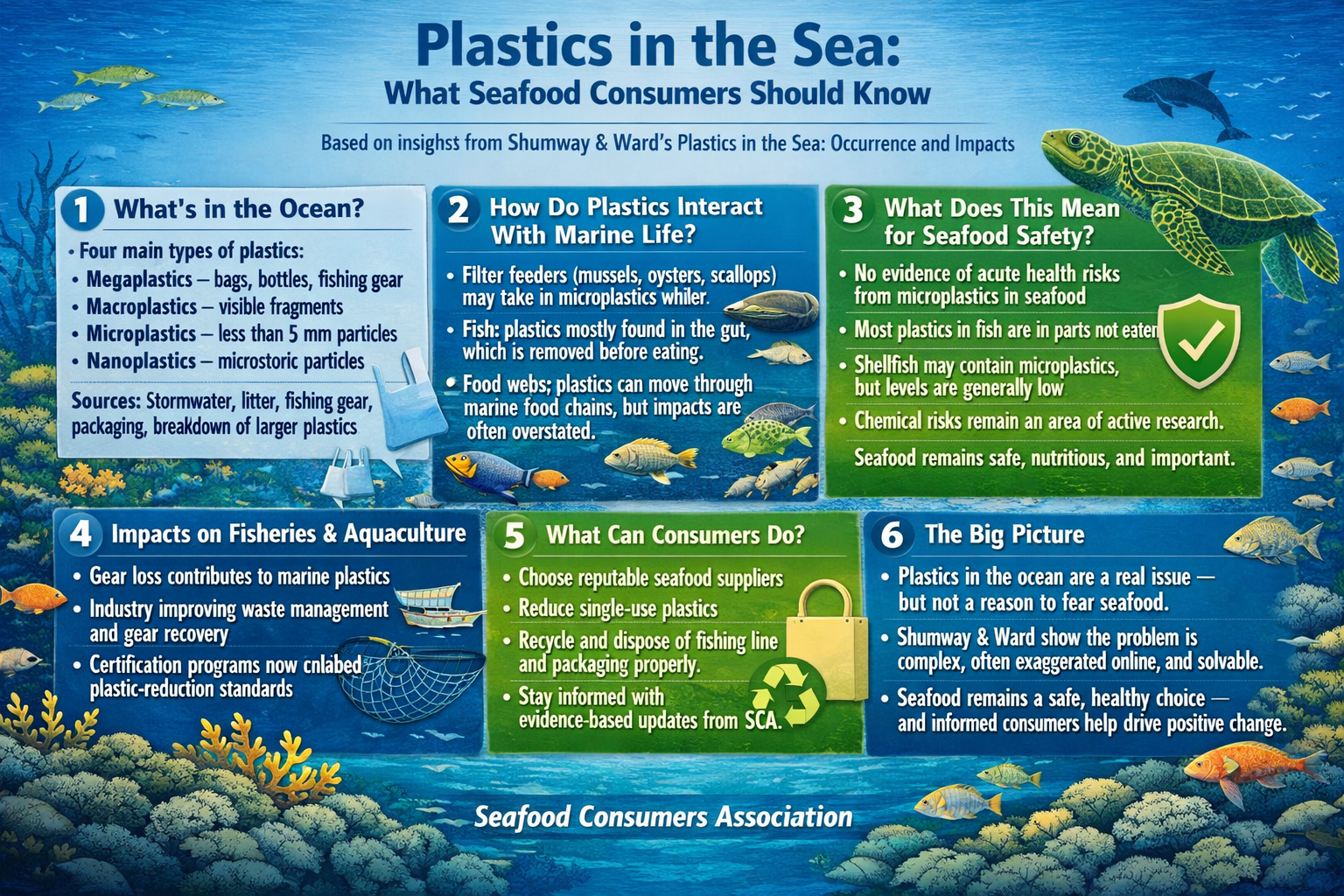
1. What kinds of plastics are in the ocean?
The book outlines four main categories:
- Megaplastics (e.g., bags, bottles, fishing gear)
- Macroplastics (visible fragments)
- Microplastics (smaller than 5 mm)
- Nanoplastics (extremely small particles)
These materials enter the ocean from land‑based waste, stormwater, fishing activities, and general degradation over time.
2. How do plastics interact with marine life?
Shumway and Ward’s work highlights that plastics can interact with a wide range of marine organisms — from zooplankton and shellfish to fish, seabirds, turtles, and marine mammals.
For seafood consumers, the most relevant interactions are:
Filter‑feeding species (e.g., mussels, oysters, scallops)
These organisms can take up microplastics simply because they filter large volumes of water. The book presents the latest research on how microplastics interact with filter feeders and how these particles may accumulate.
Fish
Fish may ingest plastics indirectly through the food web. However, most microplastics are found in the gastrointestinal tract, which is typically removed before consumption.
Food webs
The book discusses how plastics can move through food webs but also dispels myths and misconceptions about the scale and severity of these impacts.
3. What does this mean for seafood safety?
The authors emphasise that while plastics can interact with marine organisms, the science is still evolving — and many claims circulating online are exaggerated or not supported by evidence. The book specifically notes that it “discusses and dispels myths and misconceptions regarding impacts of plastics on ecosystems and marine fauna.”
Key points for consumers:
- There is currently no evidence that microplastics in seafood pose an acute health risk to humans.
- Most plastics found in fish are in parts we do not eat.
- Shellfish may contain microplastics, but levels vary widely and are generally low.
- Chemical risks from plastics in seafood remain an area of active research, not established harm.
In short: awareness is important, but panic is not warranted.
4. What about aquaculture and fisheries?
The book includes dedicated chapters on fisheries and aquaculture, noting that plastic pollution can affect gear, infrastructure, and animal health. However, it also highlights that the industry is increasingly adopting better waste management, gear recovery, and monitoring practices.
For consumers, this means:
- Many producers are actively reducing plastic inputs.
- Certification schemes increasingly include waste‑reduction criteria.
- Traceability and monitoring are improving.
5. What can consumers do?
The SCA can reassure consumers that seafood remains a safe and nutritious choice — while also encouraging practical steps that support healthier oceans:
Choose reputable suppliers
Look for producers and retailers who participate in sustainability programs or have clear waste‑reduction policies.
Reduce personal plastic use
Small changes (reusable bags, bottles, containers) help reduce the overall plastic load entering waterways.
Support recycling and proper disposal
Fishing line, soft plastics, and packaging are major contributors to marine debris.
Stay informed
Science is evolving, and organisations like SCA will continue to provide balanced, evidence‑based updates.
6. The bottom line
Plastics in the Sea is a major scientific resource that brings clarity to a complex issue. It shows that plastics do affect marine environments and some marine species — but it also dispels myths, highlights knowledge gaps, and provides a realistic, science‑based foundation for understanding the issue.
For seafood consumers, the message is clear:
Seafood remains safe, nutritious, and important — and informed consumers can play a role in reducing plastic pollution without fear‑driven messaging.
Plastics in the Sea: Occurrence and Impacts by Sandra Shumway and J. Evan Ward. All factual statements are sourced from the book descriptions and summaries available online. shop.elsevier.com Perlego
Comments
No comments yet.