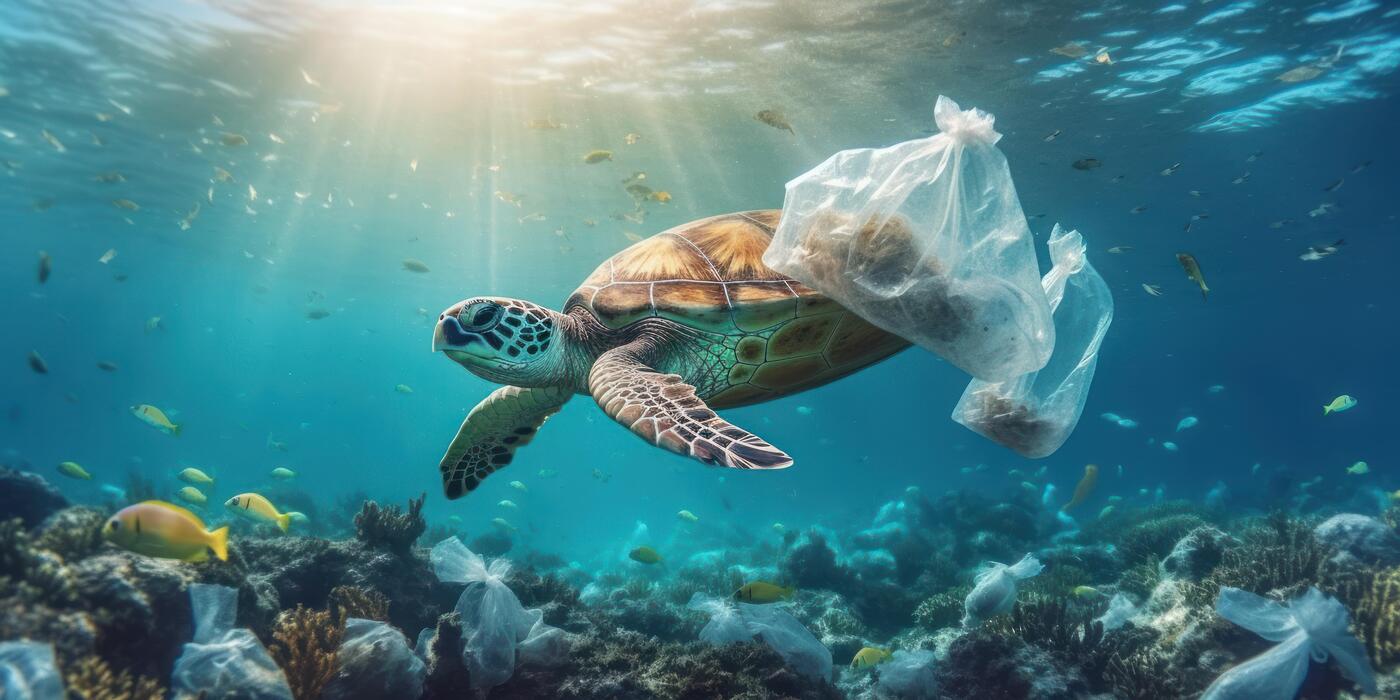
For years, we’ve known that plastic in our oceans is "bad news". We’ve seen the heartbreaking images of marine mammals entangled in debris or fish ingesting microplastics. But new research suggests the problem maybe far more dangerous than we previously imagined—not just for the fish, but for the very air we breathe.
The Ocean’s Secret Weapon: Phytoplankton
The ocean is one of our planet's most powerful defences against global warming. This is largely due to phytoplankton, tiny organisms that act like underwater forests. They perform photosynthesis, pulling carbon dioxide out of the atmosphere and replacing it with oxygen.
When these plankton die, the carbon they’ve absorbed is buried at the bottom of the ocean. Research from the CSIRO indicates that our oceans absorb nearly 30% of all human carbon dioxide emissions.
The Plastic Interference: This natural system is being disturbed by an influx of microplastics. Studies from Macquarie University indicate that exposure to common plastic items strongly impairs the photosynthetic capacity of these tiny life forms. In short: Plastic isn't just killing marine life; it’s "choking" the planet’s ability to regulate its temperature.
The "Core Contradiction" in Sustainable Branding
While the scientific community warns of these dangers, the SCA has uncovered a significant "responsibility vacuum" in how seafood is marketed to Australians.
In February 2026, the SCA queried Simplot Australia and Woolworths regarding their participation in the "Bricks" promotion, which distributed mass-produced plastic toys to children. While Simplot admitted that environmental assessments for such promotions were "not part of our standard assessment," Woolworths chose not to respond. Despite this, both organizations were recently recognized with Marine Stewardship Council (MSC) Awards for their commitment to sustainability.
As our CEO notes, "You cannot save the fish with one hand while polluting their habitat with the other".
SCA Interrogation: The Marketing Blind Spot
The SCA is calling for a fundamental reset of how "sustainability" is defined and awarded:
- The "Siloed" Approach: "Ocean Stewardship" currently ends at the processing plant or boardroom, failing to reach the marketing department.
- The Consumer Trust Gap: Australians are told to "look for the blue tick," yet that same tick is used to drive the consumption of millions of additional plastic items—the very "enemy" of a healthy ocean.
- Responsibility Deflection: Producers can no longer claim a promotion is purely "retailer-led" to avoid accountability for their plastic footprint.
Moving "Upstream": The SCA Call to Action
Recycling alone will not end plastic pollution; the solutions must lie upstream with the companies that manufacture these plastics. The SCA believes this is only the beginning of a larger journey, and we are calling for:
- Expanded Award Criteria: The MSC and other bodies must include "Total Marketing Integrity" and fraud controls as a prerequisite for any award.
- Mandatory Impact Assessments: Major retailers and suppliers must commit to the same environmental rigor for their promotional campaigns as they do for their sourcing.
- Federal Reform: Urgent mandatory design standards and a reduction in unnecessary non-functional features, such as excessive plastic packaging layers.
What This Means for You
Sustainability must be a consistent value, not just a label on a box. When you support the SCA, you are supporting a voice that demands transparency from the ocean to the dinner plate.
Join the Conversation: How do you feel about sustainability labels being used alongside plastic promotions? Share your thoughts on our blog or contact us to learn more about our advocacy work.
Based on the SCA Media Release: "Beyond the Label" (April 1, 2026) and the report: "Is plastic pollution a bigger problem than we thought?" (March 2026).
Comments
No comments yet.