

Why a National Seafood Strategy is Critical for Food Security and Sovereignty
Imagine an island nation, surrounded by some of the most vast and productive oceans on Earth, yet lacking a unified plan to harness its immense aquatic potential for the benefit of its people.
Surprisingly, this is the current reality for Australia. While we recognize the importance of agriculture and terrestrial resources, the "Blue Economy"—our marine and aquatic sectors—remains underutilized, under-appreciated, and without a comprehensive, national strategy.
Developing a robust, coordinated Blue Economy is not about economic growth or environmental conservation (though it certainly includes those things). At its core, a National Seafood Strategy is a fundamental requirement for Australia's national security, food sovereignty, and a sustainable future for the next generation.
The Strategic Imperative of a National Seafood Strategy
A coherent National Seafood Strategy is the key to unlocking a future that is food-secure, innovative, and sustainable. It is a vital framework that should not just be discussed but enacted for several compelling reasons:
1. Securing Our Food Systems (Food Security)
With global populations rising and traditional terrestrial agriculture increasingly threatened by climate instability, droughts, and resource scarcity, the world is looking toward the oceans. Seafood is a highly nutritious, low-carbon source of protein. A comprehensive national strategy would enable Australia to build a robust, climate-resilient food system, ensuring all Australians have access to healthy, affordable, and sustainably sourced seafood.
For years, our Border resources have been challenged by our neighbours constantly infringing our laws and illegally fishing in our waters. We have no way of affordably protecting extra marine areas. There are reports of our government investing millions of dollars with our neighbours assisting their fishing efforts and trying to educate them that our waters are ‘out of bounds.’ In the meantime, the Australian government is advocating that our seafood harvesters pay 100% cost recovery for the management services. This, of course, is passed onto consumers.
2. Achieving Food Sovereignty
As an island nation, it is both a necessity and a strategic imperative that Australia can feed its own population. Food sovereignty—the power for people to define their own food and agriculture systems—is the backbone of national self-reliance. In an unpredictable global geopolitical landscape, depending on other nations for essential nutrients is a profound risk. A National Seafood Strategy would cultivate and support our local aquaculture and wild-catch industries, ensuring that we are not solely reliant on international supply chains that are easily disrupted by trade disputes or global crises.
3. Championing Sustainability
Our oceans are under unprecedented stress especially from pollution. A national strategy provides the overarching framework needed for the holistic, sustainable management of our marine resources. By adopting ecosystem-based approaches, it would balance economic prosperity with environmental stewardship. It ensures we do not just "mine" our oceans, but manage them, regenerating marine life and safeguarding the health of our blue ecosystems for generations to come.
This cannot be done with the ‘silo’ approach currently in operation – there are too many government departments currently engaged in this space (federal and states/territories) which means there is no agreed pro-active strategy. Additionally, the government has decreed that fish is no longer a food and certainly not worthy of inclusion in the National Food Strategy!
It needs a National Blue Economy Department that has focus on all issues with an understanding that this is a new ‘revolution’ which we are already late to the party on.
4. Driving Economic Innovation and Regional Jobs
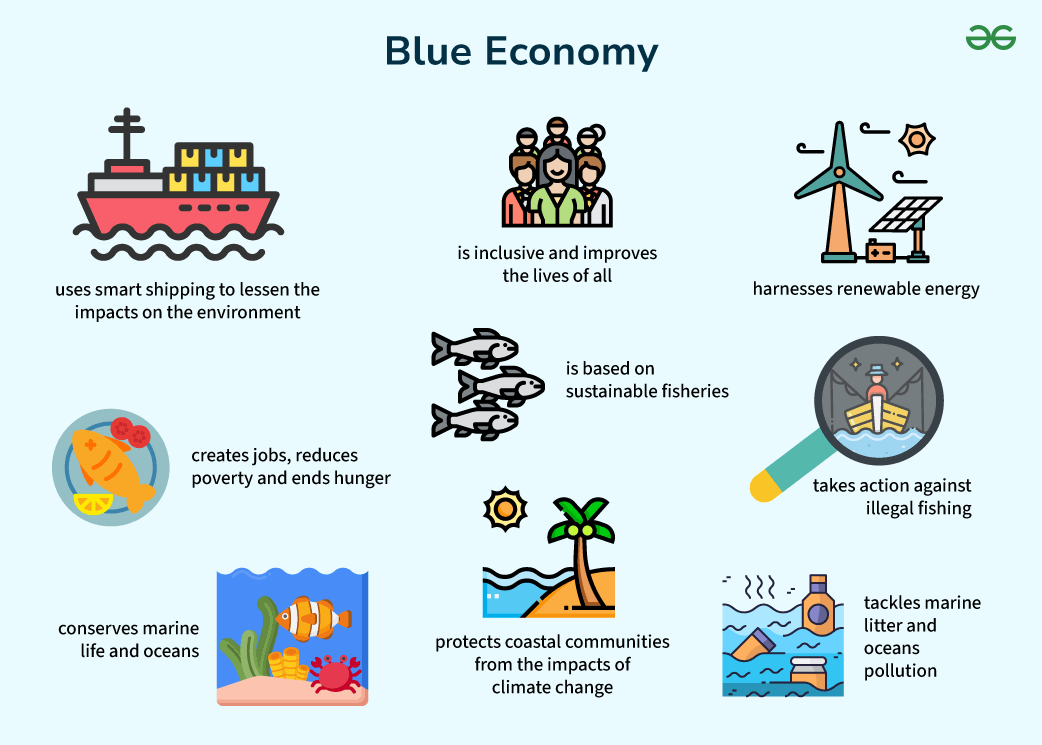
The Blue Economy is an economic powerhouse. Beyond traditional wild-catch fishing, there is enormous potential in advanced aquaculture (on-land, offshore, and near-shore), the nascent "blue carbon" market, marine biotechnology, and coastal tourism. A focused national strategy would drive innovation and create highly skilled, long-term jobs, particularly in regional and coastal communities where they are most needed. This is not just an "add-on" to our economy; it is a foundational pillar for Australia's future.
5. Building a Climate-Resilient Future
The oceans are on the front lines of climate change. A national strategy would incorporate crucial research on how a shifting climate affects marine ecosystems and fishing stocks. Work is being done by the Blue Economy CRC but is that actually getting through to government – not on what we have seen so far. Furthermore, a thriving Blue Economy could actively contribute to climate solutions through blue carbon initiatives like the restoration of seagrass beds, mangroves, and saltmarshes, which sequester significantly more carbon than land-based forests.
6. Here are the Current Statistics
Australia controls one of the largest marine jurisdictions in the world (~8.2 million km²). Despite this, domestic seafood production is according to DAFF/ABARE, modest (~292,000 tonnes 2023-4 – down 5% on 2022/3), with ~65–70% of seafood consumed in Australia being imported. The value of our harvest is A$3.7 billion (down 3% on 2022/3) – we export A$1.4 billion and we import A$2.6 billion. Our seafood consumption is 12.4 kgs per person (way below world average at about 20kgs per person).
At the same time, marine protected areas (MPAs) cover over 50% of Commonwealth waters, aligning with global biodiversity commitments under the Kunming–Montreal Global Biodiversity Framework. Highly protected “no-take” areas cover ~24% of waters.
Australia faces a policy paradox: vast ocean resources, growing seafood demand, and strong environmental protection, yet fragmented governance and underutilised seafood potential. A coordinated Blue Economy strategy is needed to integrate conservation, food production, and economic development.
The Time for Action is Now
Australia is at a critical juncture. We stand on the edge of a vast, untapped opportunity, but we must act decisively. We cannot afford fragmented, short-term approaches. We need a National Seafood Strategy that brings together scientists, industry experts, conservationists, policymakers, and communities under a shared, long-term vision.
Unlocking Australia’s Blue Economy is about more than just economics—it is about sovereignty, security, and stewardship. Let us chart a course for a prosperous, self-reliant, and sustainable future.
Comments
No comments yet.