

Lines sink into blue—
Portarlington waits, patient.
Shells grow without sound.
Just over 90 minutes from Melbourne, on the shores of Victoria’s Bellarine Peninsula, lies Portarlington — affectionately known as Victoria’s “Mussel Capital.” This charming coastal town isn’t just a picturesque getaway; it’s at the heart of one of the country’s most vibrant aquaculture stories.
Each January, the Portarlington Mussel Festival draws thousands to celebrate this humble bivalve with music, food, workshops and live entertainment on the foreshore. Locals and visitors alike savour mussels prepared in innumerable ways, from classic garlic and herb to creative regional flavours, all served alongside craft beer and Bellarine wines.
Year-round, Portarlington’s seafood scene thrives beyond the festival. Portarlington Mussel Tours offer immersive experiences on the water — you can watch the mussels growing on longlines, enjoy cooking demonstrations, and sample fresh local produce while cruising Port Phillip Bay.
The Backbone of an Industry: Australian Mussel Farming Hotspots
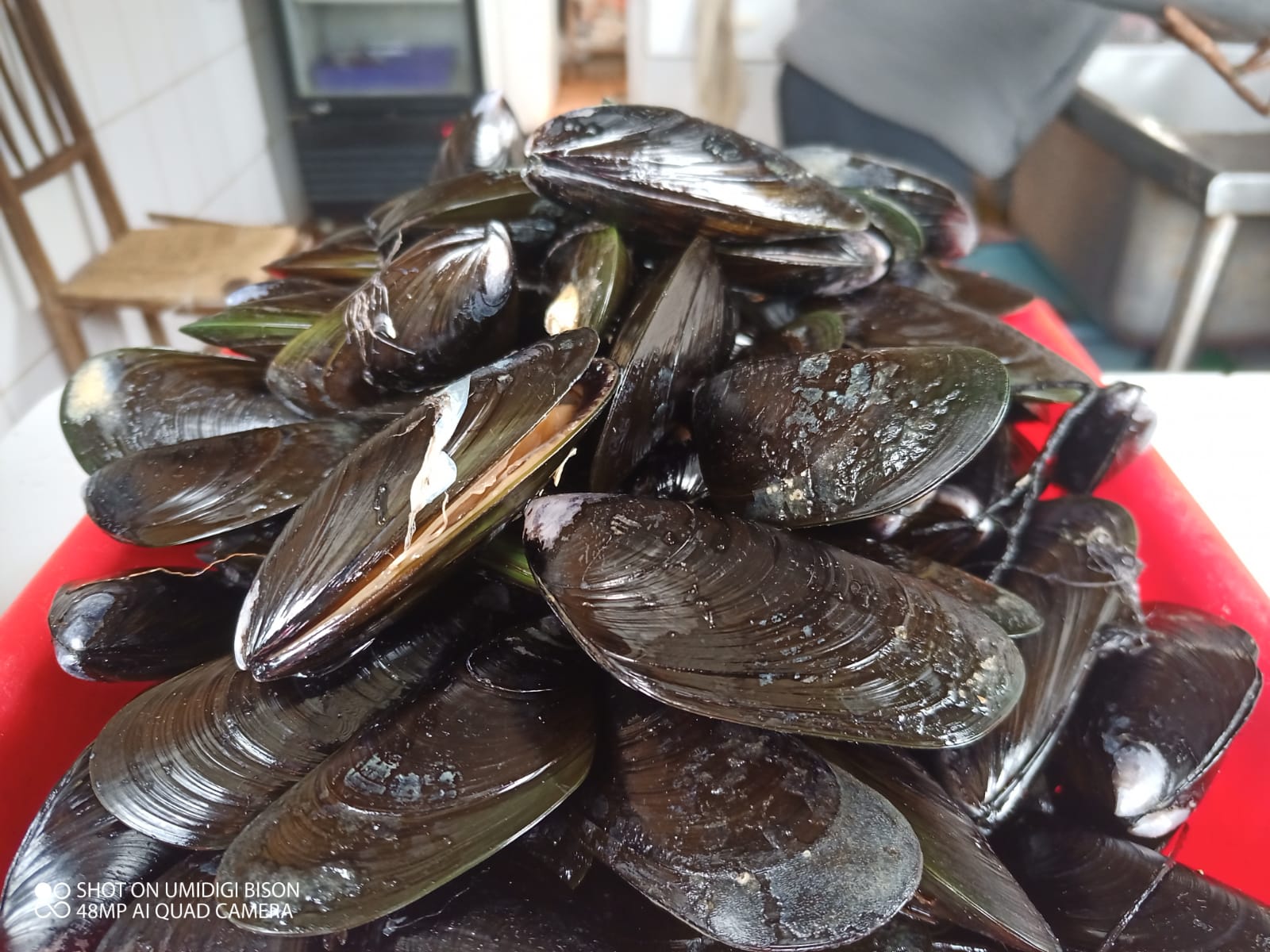
Australia’s mussel industry is diverse, geographically rich and expanding. The sweet, protein-packed Blue Mussel is the main commercial species grown here, farmed using suspended longline systems in pristine coastal waters from Victoria to Western Australia.
| Blue Mussel | Mytilus galloprovincialis | Lamarck, 1819 | 23 220001 | Mytilidae (mussels) | AS5300 | 2002-01-01 |
1. Victorian Waters — Port Phillip Bay / Bellarine
Portarlington in Port Phillip Bay is arguably the closest consumers will get to engaging in Australian mussel aquaculture. Victoria’s mussel farms produce thousands of tonnes of blue mussels annually, with around 1,500 tonnes produced in recent seasons and growing allocations expected to boost output further.
These mussels are prized domestically reflecting the high-water quality and favourable growing conditions of the bay.
2. Boston Bay — South Australia
Boston Bay, near Port Lincoln in South Australia, hosts the largest mussel farming region in the nation. Protected waters, consistent ocean currents, and nutrient-rich conditions create near-ideal growing environments. While figures vary by year, Boston Bay’s integrated farms typically produce over 1,600 tonnes annually, supplying fresh mussels year-round to markets across Australia. Boston Bay boasts that it is 3 times larger than Sydney Harbor.
Adelaide’s proximity and efficient processing infrastructure also help position Boston Bay mussels as a favourite among chefs and retailers.
3. Eden & NSW South Coast
The NSW south coast, around Eden, has a long mussel-farming tradition dating back decades. While smaller in scale compared with Victoria and South Australia, Eden remains important for regional supply and feeds local seafood markets.
4. Tasmania
Tasmania’s east coast is home to specialised mussel operations like Freycinet Marine Farm. Although smaller in total tonnage compared to other states, Tasmanian mussels benefit from cold, clear waters and are highly regarded for quality and flavour. Production in recent years has been in the hundreds of tonnes.
5. Western Australia
Southern WA’s sheltered waters also support mussel farms, contributing to the nation’s supply with seasonal harvesting and high-quality product lines that complement the southern network.
Global Mussel and Seafood Consumption: Where Australia Fits In
While mussels are a seasonal treat in Australia, consumption patterns vary significantly around the world. Broadly, Australians enjoy seafood — their per-capita intake sits comfortably above many nations — but direct mussel consumption is modest compared with traditional shellfish nations.
According to FAO data and world seafood consumption trends:
• Australia’s overall seafood consumption per person is in line with other developed seafood markets like the USA, Canada and the UK — roughly 15-20 kg per capita per year when all fish and shellfish are included.
• Belgium, the Netherlands, and other northern European countries have similar or slightly higher general seafood consumption, and bivalves like mussels hold cultural significance, especially during summer and festive seasons. Mussel dishes such as moules-frites are iconic in Belgium and widely enjoyed in the Netherlands and northern France.
• New Zealand is a standout in shellfish farming, particularly for its Green Mussels, which are a major export product and a beloved local favourite. Their overall seafood consumption is also robust.
| Green Mussel | Perna canaliculus | (Gmelin, 1791) | 23 220751 | Mytilidae (mussels) | AS5300 | 2002-01-01 |
• In North America (USA & Canada), general seafood consumption trails some European nations. Mussels tend to be more niche compared with salmon, shrimp and other shellfish, though interest in sustainable and locally farmed bivalves is rising.
• The United Kingdom and broader European markets historically consume significant quantities of shellfish and fish, though consumption varies seasonally and culturally across regions. Mussels feature in traditional coastal cuisine, but other fish species often dominate overall consumption statistics.
In sum, while Australians are enthusiastic seafood eaters, their direct mussel consumption remains modest compared with the deep shellfish traditions in parts of Europe and New Zealand’s mussel culture. Yet, local events like the Portarlington Mussel Festival highlight a growing appreciation for these delicious, sustainable bivalves. A comment once made by a Spanish producer was ‘Mussels are a way of life for us, you see the Mussel rafts in most of our estuaries, and we eat all year round; in Belgium and Netherlands they build festivals around them and consume seasonally. NZ eats 10% of what Belgium/Netherlands consumes and Australia consumes 10% of what NZ eats.”
A Sustainable Future for Mussel Lovers
Mussels are not only delicious — they are one of the most environmentally sustainable forms of aquaculture, filtering water also as they grow and requiring minimal feed inputs. As production expands in Victoria, South Australia, Tasmania and beyond, and consumer interest in healthy seafood rises, Australia’s mussel story is poised for a bright future.
Whether you’re planning a culinary ferry or road trip to Portarlington or exploring mussel dishes at your local fishmonger, this ocean-grown superfood has an expanding role on dinner plates at home and around the world.
From Farm to Fork: Simple Mussel Recipes to Try at Home
One of the great strengths of mussels is their simplicity. Fresh Australian mussels cook quickly, absorb flavour beautifully, and suit both casual family meals and entertaining. Below are a few easy, globally inspired recipes that reflect how mussels are enjoyed in Australia and around the world.
Oh and do not worry about the ‘myth’ of mussels not opening and only eating them when there is an ‘R’ in the month, please see https://www.abc.net.au/science/articles/2008/10/29/2404364.htm?site=galileo/greatmomentsinscience&topic=latest
Classic Australian White Wine & Garlic Mussels
Ingredients:
Fresh mussels, olive oil, garlic, onion or shallot, dry white wine, parsley, lemon
Method:
Sauté garlic and onion in olive oil, add mussels and a generous splash of white wine. Cover and steam for 4–5 minutes until shells open. Finish with parsley and lemon. Serve with crusty bread to soak up the broth.
Belgian-Style Moules-Frites
Ingredients:
Mussels, butter, leek, celery, garlic, white wine, cream, thyme
Method:
Sweat vegetables in butter, add mussels and wine, steam until open, then finish with cream and thyme. Serve with hot, crispy chips.
Why it works: This dish showcases why mussels are so beloved in northern Europe — comforting, affordable and deeply satisfying.
Thai Coconut & Chilli Mussels
Ingredients:
Mussels, coconut milk, red curry paste, ginger, chili, lime leaves, coriander
Method:
Simmer curry paste with coconut milk and aromatics. Add mussels and steam until open. Finish with lime juice and coriander.
Pair with: Steamed rice or grilled flatbread.
Tomato, Chili & Herb Mussels (Mediterranean Style)
Ingredients:
Mussels, olive oil, garlic, chili flakes, cherry tomatoes, white wine, basil or oregano
Method:
Cook tomatoes, garlic and chili in olive oil, deglaze with wine, add mussels and steam until open. Finish with herbs.
Serve with: Pasta, polenta or toasted sourdough.
New Zealand-Inspired Mussels with Green Herbs & Lemon
Ingredients:
Mussels, olive oil, garlic, lemon zest, parsley, dill or fennel fronds
Method:
Quickly steam mussels with garlic and a splash of water or wine. Finish with lemon zest and herbs.
Why Mussels Belong on Australian Tables
Mussels are nutrient-dense, affordable, fast to cook, and among the most sustainable proteins available. They fit naturally into Australian lifestyles — whether cooked on a barbecue, shared at a long lunch, or served simply mid-week. So easy to prepare!
Finally, we close with a poem that hopefully gets you into the mood
Portarlington
Portarlington, at first light.
The bay is still.
Lines sink.
Work waits.
This town did not announce itself.
It learned from the tides—
its patience,
its limits.
Below the surface,
mussels grow
slowly,
suspended,
taking only what the bay provides.
This is not extraction.
It is care.
Hands lift what is ready.
Nothing more.
The rest is left to time.
Season after season,
the work continues.
Quiet.
Exact.
From here,
food travels outward—
plates, tables, distance—
yet its origin remains unchanged.
Portarlington.
Not a name claimed,
but earned.
Even now,
beneath celebration and noise,
the rhythm endures.
Lines sway.
Shells thicken.
The bay holds.
Portarlington—
shaped by restraint,
defined by patience,
a place where value is grown
unseen,
until it is ready.
Comments
No comments yet.