
Fishing is an ancient human practice dating back at least 40,000 years. From the thousand-year-old dried cod trade that sustained Viking voyages to the modern high-tech vessels of today, the ocean has always been our lifeblood. Today, we are witnessing a massive paradigm shift: the transition from a traditional "hunter-gatherer" model to a sophisticated Blue Economy.
Innovation Born from the Ice
The history of seafood is a history of innovation. eccentric naturalist Clarence Birdseye invented commercial flash-freezing after observing Inuit fishing techniques. This breakthrough didn't just give us fish fingers; it paved the way for modern refrigeration, which eventually enabled technologies as diverse as In Vitro Fertilization (IVF).
Similarly, researchers studying Inuit health in the 1970s discovered the protective power of Omega-3 fatty acids found in fish—nutrients essential for human brain and eyesight function that our bodies cannot produce on their own.
The World's Most Dangerous Job
Despite technological leaps, commercial fishing remains one of the most hazardous occupations globally. In Australia, it consistently tops the list of dangerous jobs, surpassing even mining and truck driving, despite a highly regulatory safety regime. A tragic reality remains between 2000 and 2011, 182 fishermen died in the US from falling overboard, and notably, none were wearing a personal flotation device (PFD) at the time. Innovation exists, but adoption is the hurdle.
The Rise of Aquaculture: A Historic Turning Point
Aquaculture is now the world’s fastest-growing primary industry.
- A New Record: In 2022, for the first time in history, aquaculture production of aquatic animals surpassed capture fisheries.
- Global Engine: Aquaculture now provides 51% of all aquatic animal production and a record 57% of seafood destined for human consumption. Yet we still test products as if they were all ‘wild caught’.
- Asian Leadership: Over 91% of global aquaculture production now comes from Asia. By 2030, 66% of the global middle class is projected to live in Asia, where seafood consumption is already at its highest.
"In the East, aquaculture is culture, it is life... In the West, it is science and technology embodied in industry providing profits. The West has much to learn from the East."
— Elizabeth Mann Borgese, "Seafarm"
The $2.2 Trillion Blue Economy
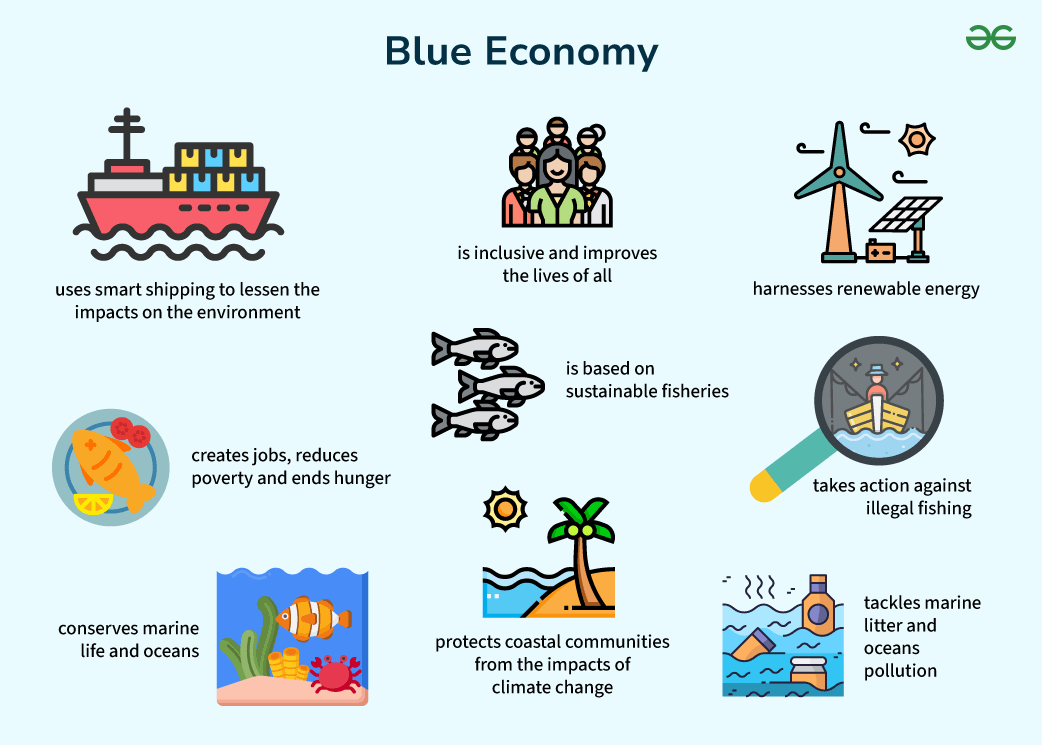
The "Blue Economy" is an ocean-based economy that simultaneously promotes economic growth, environmental sustainability, and social inclusion. Global ocean trade reached a record $2.2 trillion in 2023.
The Future Market Share of the Blue Economy:
| Sector | Current/2024 Market Position | 2034–2050 Projection |
| Aquaculture Protein | 12% of world protein market | >50% by 2050 |
| Marine Biotechnology | $6.72 Billion in 2024 | $13.59 Billion by 2034 |
| Marine Nutraceuticals | 32% of total nutraceutical market | Growing rapidly via AI |
| Blue Energy | <8% of current energy market | High potential in bio-hydrogen |
The Answer Lies in the Ocean
The Earth is 71% water, yet we treat it as an afterthought. With less than 1% of the world's water being fresh, the "sustainable" future of land-based livestock is increasingly doubtful.
To unlock the ocean's potential, we must bypass the "red and green tape" of outdated governance and invest in Blue Transformation. We need an education revolution that fosters entrepreneurial skills and a cultural shift in how we view our "Ocean Planet".
As we look toward 2050, the conclusion is clear: The answer lies in the ocean!